Accredited TC and RTD Simulator Calibration in Madison
ISO/IEC 17025 accredited tc and rtd simulator calibration in Madison. NIST-traceable results, documented uncertainty, and ITS-90 referenced measurement — delivered with a 5-day standard turnaround.
TC and RTD Simulator Calibration
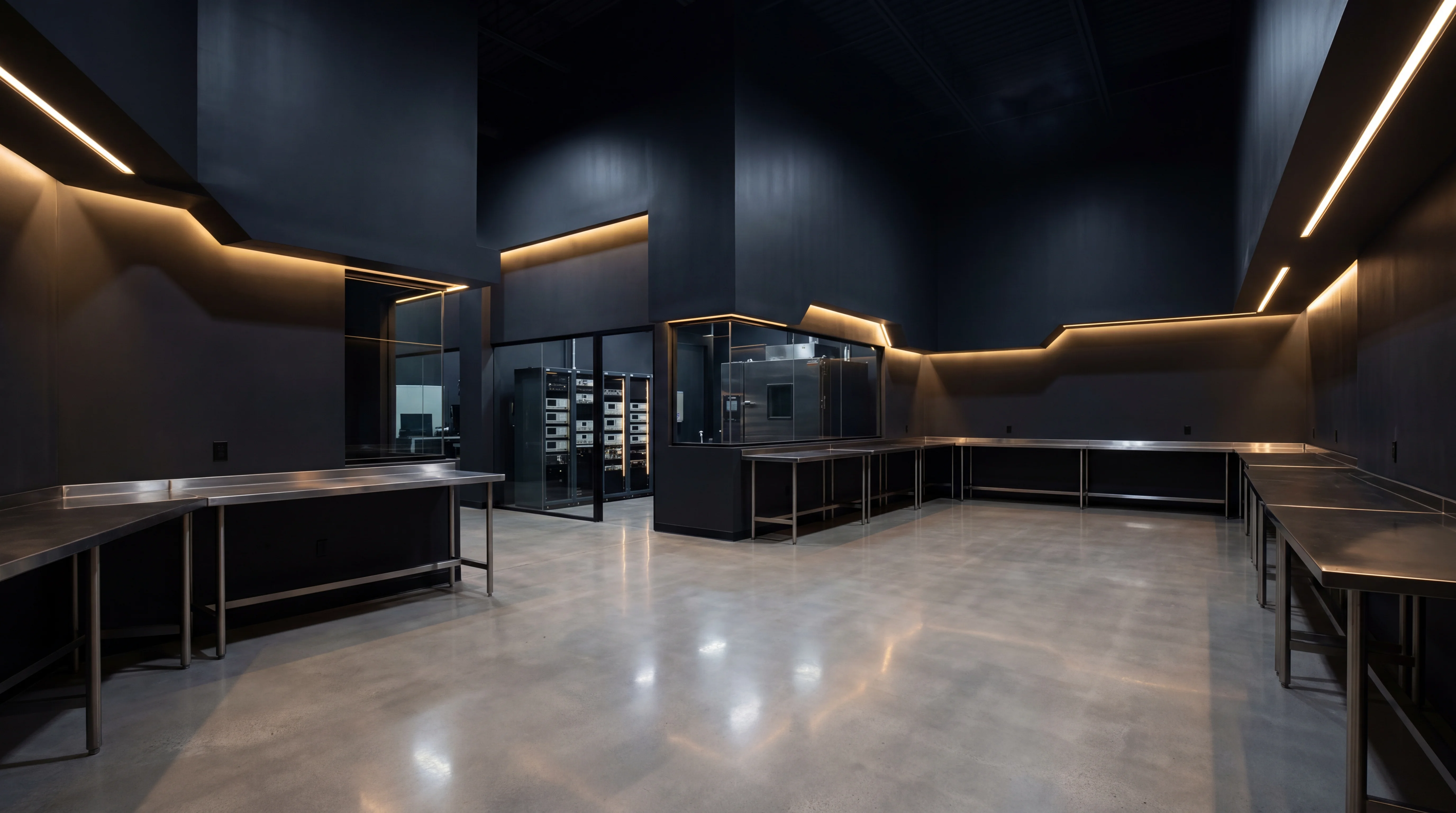
TC and RTD simulator calibration is the process of verifying and adjusting electronic instruments that replicate the electrical output signals of thermocouples and resistance temperature detectors. Thermocouple simulators generate precise millivolt signals corresponding to specific temperature values defined by ASTM E230/E230M reference tables, while RTD simulators produce calibrated resistance values that match the temperature-resistance characteristics specified in IEC 60751 and ASTM E1137. These simulators are essential tools used to test, verify, and calibrate temperature measurement systems without requiring actual temperature sources.
Calibration is performed by comparing the simulator's output against NIST-traceable reference standards under controlled laboratory conditions. Each output point is measured and evaluated against published tolerance specifications to confirm that the simulator produces accurate electrical signals across its full operating range. Deviations are documented, and adjustments are applied as needed to restore the instrument to within its specified accuracy. An ISO/IEC 17025 accredited calibration certificate is issued upon completion, documenting all measurement results, associated uncertainties, and traceability information.
Process, Standards & Applications
The TC and RTD Simulator Calibration Process
Step 1: Instrument Receipt and Evaluation
The simulator is received, inspected for physical damage, and documented with its make, model, serial number, and calibration history. The instrument's specification sheet is referenced to establish the manufacturer's stated accuracy and the specific thermocouple types (B, E, J, K, N, R, S, T, C) or RTD curves (Pt100, Pt1000, Cu, Ni) supported by the device. Any customer-specified test points or tolerance requirements are recorded at this stage.
Step 2: Environmental Stabilization
The simulator is allowed to stabilize in a temperature-controlled laboratory environment. Ambient conditions including temperature, humidity, and barometric pressure are monitored and recorded, as these environmental factors directly influence the accuracy of low-level electrical measurements such as millivolt and resistance outputs.
Step 3: Reference Standard Verification
NIST-traceable reference standards, including precision digital multimeters and resistance bridges, are verified for current calibration status. Reference instruments used in the calibration process carry measurement uncertainties traceable to the National Institute of Standards and Technology through an unbroken chain of comparisons conforming to ITS-90.
Step 4: Output Measurement and Comparison
The simulator is set to generate output signals at predetermined cardinal points across its full range. For thermocouple simulation, millivolt outputs are measured and compared against ASTM E230/E230M reference tables. For RTD simulation, resistance outputs are measured and compared against IEC 60751 tolerance specifications. Each measurement point is recorded along with the reference standard reading and the calculated deviation.
Step 5: Adjustment and Verification
If measured deviations exceed the manufacturer's stated accuracy or customer-specified tolerances, adjustments are performed to bring the simulator within specification. Following any adjustment, a complete verification pass is conducted to confirm that all output points fall within acceptable limits.
Step 6: Documentation and Certification
A calibration certificate is generated in accordance with ISO/IEC 17025 requirements. The certificate includes all measured data points, as-found and as-left readings, calculated measurement uncertainties with coverage factors, environmental conditions during calibration, and full traceability information. Certificates conform to EA-4/02 M: 2022 guidelines for the expression of uncertainty in measurement.
Compliance & Standards
TC and RTD simulator calibration is governed by a framework of international and national standards that ensure measurement accuracy, traceability, and reproducibility. ISO/IEC 17025 establishes the general requirements for the competence of calibration laboratories, including method validation, measurement uncertainty evaluation, and quality management system compliance. Accreditation by bodies such as A2LA (American Association for Laboratory Accreditation) provides independent verification that a laboratory meets these requirements.
NIST traceability ensures that all calibration measurements link back to the National Institute of Standards and Technology through an unbroken chain of documented comparisons, each with stated uncertainties. The International Temperature Scale of 1990 (ITS-90), established by the International Committee of Weights and Measures (CIPM), defines the procedures and fixed-point references used to realize temperature values on the Kelvin and Celsius scales.
Thermocouple simulator outputs are evaluated against ASTM E230/E230M, which specifies temperature-electromotive force (EMF) tables for standardized thermocouple types. RTD simulator outputs are assessed per IEC 60751 and ASTM E1137, which define the resistance-temperature relationships and tolerance classes for platinum resistance thermometers. ASTM E220 provides the test method framework for thermocouple calibration by comparison techniques.
Industry Applications
TC and RTD simulator calibration is critical across industries where temperature measurement accuracy directly impacts product quality, safety, and regulatory compliance. In pharmaceutical manufacturing, simulator calibration supports the verification of temperature monitoring systems used in storage, production, and sterilization processes governed by FDA 21 CFR Part 211 and GMP requirements.
The aerospace and defense sectors rely on calibrated simulators to validate instrumentation used in engine testing, environmental chambers, and flight-critical thermal management systems. Petrochemical and refining operations use TC and RTD simulators to verify process control loops that monitor reactor temperatures, distillation columns, and heat exchangers where measurement errors create safety hazards.
In food and beverage processing, calibrated simulators are essential for verifying HACCP-compliant temperature monitoring equipment used in pasteurization, cold storage, and cooking processes. Power generation facilities, including nuclear, gas turbine, and renewable energy plants, depend on simulator calibration to maintain the integrity of turbine inlet temperature measurements and boiler control systems. Semiconductor fabrication, automotive manufacturing, and metals processing also require regularly calibrated TC and RTD simulators to validate the temperature instrumentation used in tightly controlled thermal processes.
Supported Instrument Variants
Thermocouple Simulator Calibration
Thermocouple simulator calibration verifies that an electronic instrument accurately reproduces the millivolt output signals characteristic of standardized thermocouple types. These simulators generate voltage signals corresponding to specific temperature values as defined in ASTM E230/E230M reference tables, covering types B, E, J, K, N, R, S, T, and C. During calibration, the simulator's millivolt output is measured at selected cardinal points across its operating range using a NIST-traceable precision digital multimeter.
Each measured value is compared against the published EMF table values, and deviations are evaluated against the manufacturer's stated accuracy or applicable tolerance grades. ASTM E230 defines both Standard and Special grade tolerances—for example, Type K Standard grade permits ±2.2°C, while Special grade tightens this to ±1.1°C. Calibration results are documented with as-found and as-left data, measurement uncertainties, and traceability to ITS-90 through NIST. An ISO/IEC 17025 accredited certificate is issued upon completion of the calibration process.
RTD Simulator Calibration
RTD simulator calibration confirms that an electronic instrument accurately reproduces the resistance values corresponding to specific temperatures as defined by IEC 60751 and ASTM E1137 standards. RTD simulators replicate the resistance-temperature characteristics of platinum, copper, and nickel resistance elements, eliminating the need for actual temperature sources when testing and verifying temperature readout devices, transmitters, and control systems.
During calibration, the simulator's resistance output is measured at designated test points using NIST-traceable precision resistance measurement equipment, including high-accuracy digital multimeters and resistance bridges. Measured values are compared against the published resistance-temperature tables for the specific RTD type—Pt100, Pt200, Pt500, or Pt1000 configurations are the most common. Tolerances are evaluated per IEC 60751 Class A or Class B specifications, where Class A permits ±(0.15 + 0.002×|t|)°C. All calibration data, including as-found readings, as-left readings, and calculated measurement uncertainties, is recorded on an ISO/IEC 17025 accredited calibration certificate.
Multi-Function Temperature Calibrator Calibration
Multi-function temperature calibrator calibration addresses instruments capable of sourcing and measuring signals across multiple thermocouple types, RTD configurations, and related electrical parameters such as millivolts, ohms, and milliamps. These versatile instruments serve as field and bench calibration tools for temperature measurement systems and require comprehensive verification across all supported functions.
Calibration is performed by testing each function independently against NIST-traceable reference standards. Thermocouple source and measure functions are verified against ASTM E230/E230M EMF tables, while RTD source and measure functions are evaluated per IEC 60751 resistance-temperature specifications. Additional electrical output functions, including millivolt sourcing and resistance simulation, are measured and compared against traceable voltage and resistance standards. The calibration scope covers the instrument's full operating range across all supported sensor types, ensuring comprehensive accuracy verification. Results are documented on an ISO/IEC 17025 accredited certificate that details performance data for each function tested.
Additional Variants Supported
- · Copper RTD Simulator Calibration
- · Nickel RTD Simulator Calibration
- · Resistance Decade Box Calibration
- · Millivolt Source Calibration
Madison Industry Demand
Temperature Calibration Demand in Madison, WI
Madison and the surrounding Dane County area host a concentration of biopharmaceutical, life sciences, and advanced manufacturing operations that depend on accurate temperature measurement. Catalent Biologics operates a drug substance manufacturing facility in Madison featuring bioreactors ranging from 50- to 4,000-liter scale, where precise thermal monitoring is essential to product integrity. Promega Corporation, headquartered in Madison, manufactures biotechnology reagents and enzymes across multiple campus facilities, including the Chappelle Manufacturing Center, that require tightly controlled thermal environments. Sub-Zero Group, Inc. produces premium refrigeration and cooking appliances at its Fitchburg manufacturing campus, where production-line temperature verification is integral to quality assurance.
Arrowhead Pharmaceuticals is constructing a $250 million manufacturing facility in nearby Verona, further expanding the region's biopharmaceutical footprint. Exact Sciences, a molecular diagnostics company also based in Madison, relies on temperature-sensitive laboratory processes for its cancer screening products. These operations collectively generate sustained demand for NIST-traceable temperature calibration across thermocouples, RTDs, and digital reference thermometers.
Local Compliance Requirements
Biopharmaceutical manufacturers in the Madison area, including Catalent and Promega, are subject to FDA 21 CFR Parts 210 and 211, which mandate that temperature-measuring instruments used in drug manufacturing are calibrated at suitable intervals using certified reference standards. Facilities handling biological products must also comply with FDA 21 CFR Part 600 requirements for environmental monitoring and equipment qualification.
Food processing and cold-chain operations in the region are governed by FDA FSMA regulations and USDA FSIS directives that require documented calibration of temperature monitoring equipment. Advanced manufacturers such as Sub-Zero Group must meet ISO 9001 quality management standards, which include mandatory calibration of measurement instruments at defined intervals traceable to national or international standards. All calibration activities supporting these compliance frameworks are performed in accordance with ISO/IEC 17025 accreditation requirements, ensuring measurement uncertainty is documented and traceability to ITS-90 and NIST standards is maintained.