Accredited Environmental Chamber Calibration in Wisconsin
ISO/IEC 17025 accredited environmental chamber calibration in Wisconsin. NIST-traceable results, documented uncertainty, and ITS-90 referenced measurement — delivered with a 5-day standard turnaround.
Environmental Chamber Calibration
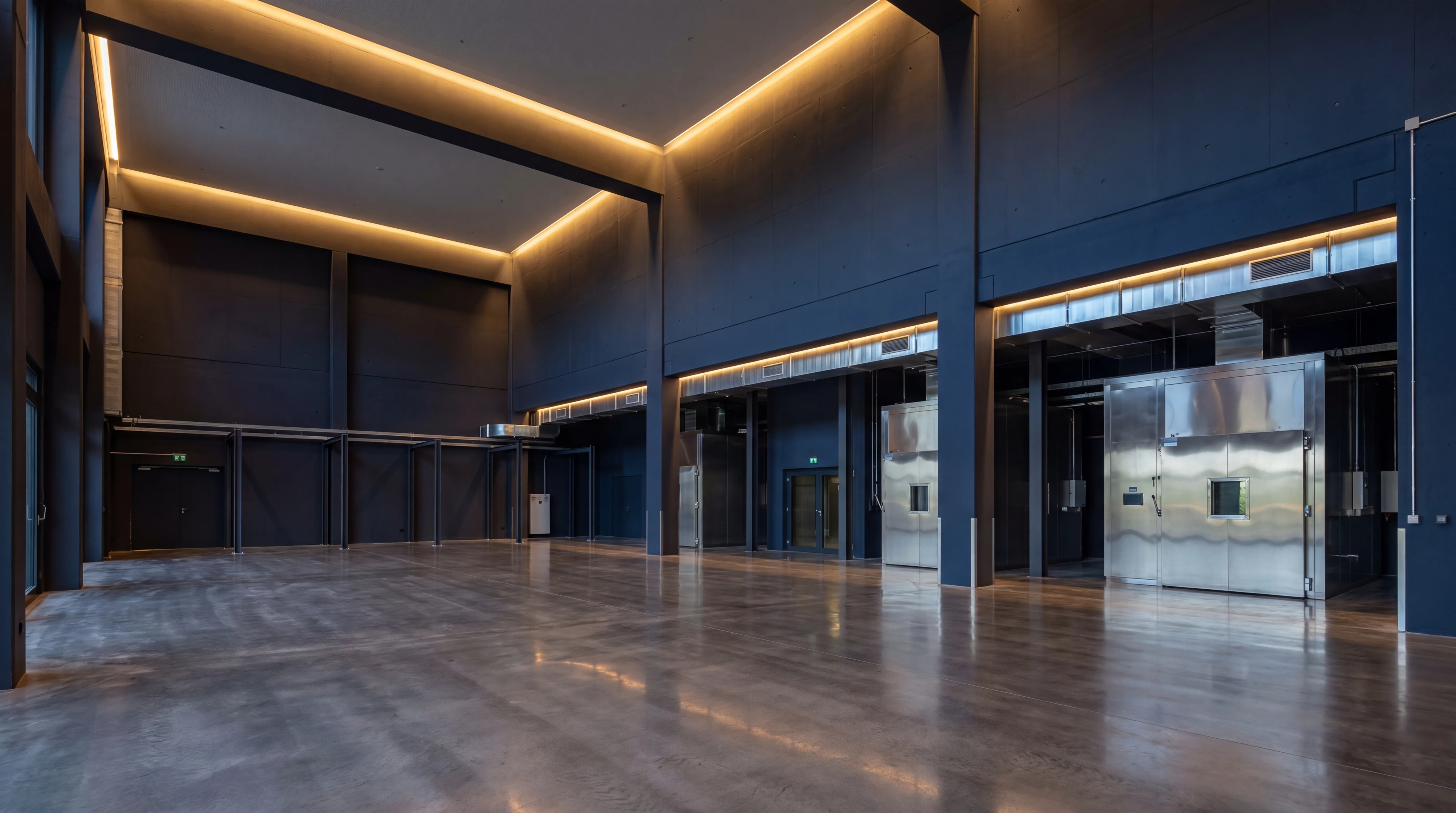
Environmental chamber calibration is the process of verifying and documenting the accuracy, uniformity, and stability of temperature and humidity conditions within an environmental test chamber. Calibration is performed by placing NIST-traceable reference sensors at multiple locations throughout the chamber's working volume to measure spatial temperature distribution, humidity accuracy, and control system response under both empty and loaded conditions.
The procedure establishes whether the chamber operates within specified tolerances—typically ±0.5°C for temperature and ±2.5% for relative humidity in precision-grade applications. Data collected during calibration is used to identify hot spots, cold spots, and gradients that affect test validity. A calibration certificate is issued documenting measurement uncertainty, sensor traceability, and pass/fail determinations against applicable standards such as IEC 60068, MIL-STD-810, or manufacturer specifications.
Regular calibration intervals of 6 to 12 months are standard for maintaining ISO/IEC 17025 compliance and ensuring that test results produced by the chamber remain defensible and reproducible.
Process, Standards & Applications
The Environmental Chamber Calibration Process
Step 1: Pre-Calibration Assessment
The chamber is inspected for physical condition, sensor integrity, and control system functionality. Existing calibration records are reviewed to identify previous deviations or known problem areas. The chamber's operating range, setpoints, and uniformity requirements are documented based on the applicable test standard or customer specification.
Step 2: Sensor Placement and Instrumentation
NIST-traceable reference thermocouples or RTD probes are positioned throughout the chamber's working volume, including corners, center points, and areas near doors or air inlets. Sensor tips are placed at least three inches from any interior surface to avoid conductive interference. For humidity-capable chambers, calibrated humidity reference sensors are installed at designated positions.
Step 3: Temperature Uniformity Survey
The chamber is brought to each required setpoint and allowed to stabilize. Multi-channel data loggers record simultaneous readings from all reference sensors over a defined soak period. Spatial uniformity is calculated as the maximum deviation between any sensor reading and the chamber's displayed or commanded setpoint. Surveys are conducted at the chamber's minimum, maximum, and intermediate operating temperatures.
Step 4: Humidity Verification
For chambers with humidity control, relative humidity is verified at specified setpoints using calibrated chilled-mirror hygrometers or capacitive humidity references. Accuracy is assessed against tolerances defined by the applicable standard—commonly ±2% to ±5% RH depending on the test requirement and chamber classification.
Step 5: Data Analysis and Certificate Issuance
All measurement data is analyzed to determine pass/fail status against the applicable specification. Measurement uncertainty is calculated in accordance with ISO/IEC 17025 requirements. A calibration certificate is issued documenting sensor locations, raw data, uniformity calculations, uncertainty budgets, and traceability statements. Certificates reference the specific standards used for acceptance criteria.
Compliance & Standards
Environmental chamber calibration is governed by a framework of international and military standards that define performance requirements, test methods, and calibration procedures. ISO/IEC 17025 accreditation is the foundation for laboratory calibration competence, requiring documented measurement uncertainty, sensor traceability to national standards, and rigorous quality management systems.
IEC 60068 is the primary international standard for environmental testing of electrotechnical products. IEC 60068-2-1 and IEC 60068-2-2 address cold and dry heat testing respectively, while IEC 60068-2-78 defines steady-state humidity test conditions. Each part specifies chamber performance requirements including temperature tolerances, ramp rates, and stabilization criteria.
MIL-STD-810 establishes environmental test methods for military equipment, requiring chamber calibration traceable to national metrology institutes. MIL-STD-883 Methods 1010 and 1011 define temperature cycling and thermal shock test requirements for microelectronics, including transfer time limits and dwell time minimums.
AMS 2750 governs pyrometry requirements for thermal processing equipment and defines temperature uniformity survey procedures, sensor calibration intervals, and instrumentation classifications. FDA 21 CFR Part 211 and ICH Q1A(R2) guidelines mandate stability chamber qualification for pharmaceutical applications.
Industry Applications
Environmental chamber calibration is required across industries where product reliability, regulatory compliance, and quality assurance depend on controlled environmental testing conditions.
In aerospace and defense, chambers calibrated to MIL-STD-810 and RTCA DO-160 specifications are used to qualify avionics, electronic assemblies, and structural components for extreme temperature, altitude, and humidity exposure. Calibration ensures that qualification test results satisfy airworthiness and contractual requirements.
The pharmaceutical industry relies on stability chambers calibrated to ICH Q1A(R2) guidelines for drug stability studies. Chambers must maintain 25°C ± 2°C / 60% RH ± 5% RH for long-term studies and 40°C ± 2°C / 75% RH ± 5% RH for accelerated conditions. FDA compliance requires documented calibration with full traceability.
Automotive manufacturers use environmental chambers calibrated to ISO 16750 for component durability testing, thermal cycling, and humidity resistance evaluation. Electronics manufacturers depend on calibrated chambers for IEC 60068 compliance testing, ensuring components perform reliably across rated temperature and humidity ranges.
Medical device manufacturers require calibrated environmental chambers for biocompatibility testing, accelerated aging studies, and packaging validation under ISO 11607 and FDA 21 CFR Part 820 requirements.
Supported Instrument Variants
Temperature Chamber Calibration
Temperature chamber calibration verifies the accuracy and uniformity of temperature-only environmental chambers used in product testing, material conditioning, and quality assurance applications. These chambers operate across ranges from -70°C to +350°C depending on design and are calibrated using NIST-traceable platinum resistance thermometers or thermocouples positioned at multiple locations within the working volume.
A temperature uniformity survey is performed at each operational setpoint to quantify spatial variation. Typical acceptance criteria require uniformity within ±1.0°C to ±2.0°C depending on the test standard applied. Control accuracy is verified by comparing the chamber's displayed temperature against reference sensor readings at steady-state conditions.
Calibration is performed in accordance with IEC 60068-2-1 for cold testing and IEC 60068-2-2 for dry heat testing. Calibration intervals of 6 to 12 months are standard for ISO/IEC 17025 compliance, with certificates documenting measurement uncertainty, sensor traceability, and uniformity data for each surveyed setpoint.
Thermal Shock Chamber Calibration
Thermal shock chamber calibration verifies the performance of dual-zone or three-zone chambers designed to subject test specimens to rapid temperature transitions between extreme hot and cold environments. These chambers are calibrated to confirm that each zone maintains its specified temperature, that transfer times between zones meet requirements, and that recovery times fall within acceptable limits.
MIL-STD-883 Method 1011 requires thermal shock chambers to achieve transfer times not exceeding one minute between hot and cold zones. Dwell times must be a minimum of 10 minutes, and the load must reach the specified temperature within 15 minutes. Calibration verifies these parameters using NIST-traceable reference sensors positioned at worst-case load locations within each zone.
Zone temperatures are verified under loaded conditions to confirm that thermal mass does not cause unacceptable deviation from setpoints. Calibration certificates document zone temperature accuracy, transfer time measurements, recovery profiles, and measurement uncertainty for each parameter tested.
Stability Chamber Calibration
Stability chamber calibration is essential for pharmaceutical, biotechnology, and food science applications where products undergo long-term and accelerated aging studies under controlled temperature and humidity conditions. Calibration is performed to verify compliance with ICH Q1A(R2) guidelines, which define specific storage conditions including 25°C ± 2°C / 60% RH ± 5% RH for long-term studies and 40°C ± 2°C / 75% RH ± 5% RH for accelerated testing.
Temperature mapping studies are conducted by placing calibrated sensors at strategic locations throughout the chamber—including corners, center, and near the door—to verify spatial uniformity under both empty and loaded conditions. Humidity is verified using calibrated chilled-mirror hygrometers or traceable capacitive sensors.
Documentation requirements include temperature mapping data, thermal distribution charts, sensor calibration certificates, and timestamped measurement logs. All records must be traceable to specific personnel and equipment to satisfy FDA 21 CFR Part 211 and ICH audit requirements.
HALT / HASS Testing Chamber Calibration
HALT/HASS chamber calibration verifies the performance of highly accelerated life test and highly accelerated stress screening systems used to identify product design weaknesses and manufacturing defects. These chambers combine rapid thermal cycling with multi-axis vibration, requiring calibration of both thermal and mechanical parameters.
HALT chambers are calibrated to confirm temperature capability from -100°C to +200°C with thermal change rates of 50°C per minute or greater. Vibration systems are verified for random energy output from 2 Hz to 10,000 Hz across six degrees of freedom. Calibration is performed in accordance with IPC 9592A, the governing standard for HALT and HASS testing requirements.
Thermal uniformity is verified across the product mounting table under loaded conditions, and vibration transmissibility is measured to confirm that fixture design delivers specified energy levels to the test specimen. Calibration certificates document thermal ramp rates, zone uniformity, vibration response spectra, and measurement uncertainty for all verified parameters.
Additional Variants Supported
- · humidity chamber calibration
- · altitude chamber calibration
- · climate chamber calibration
- · photostability chamber calibration
- · salt spray chamber calibration
- · cryogenic chamber calibration
- · vacuum chamber calibration
- · AGREE chamber calibration
- · benchtop test chamber calibration
- · reach-in chamber calibration
- · walk-in chamber calibration
- · drive-in test chamber calibration
- · pressure chamber calibration
- · growth chamber calibration
- · UV chamber calibration
Wisconsin Industry Demand
Temperature Calibration Demand in Wisconsin
Wisconsin's manufacturing sector employs over 480,000 workers across more than 8,900 plants, generating substantial demand for traceable temperature calibration services. The state's dairy and food processing industry -- anchored by companies such as Johnsonville in Sheboygan Falls and Schreiber Foods with operations across the state -- requires precise temperature monitoring to meet strict pasteurization and cold-storage standards enforced under Wisconsin Administrative Code ATCP 65.40.
In the Milwaukee corridor, GE Healthcare in Waukesha manufactures diagnostic imaging equipment where thermal validation is essential to product reliability. Kohler Co. operates a 5.2-million-square-foot manufacturing campus in Kohler, and Mercury Marine maintains engine production and autoclave operations in Fond du Lac -- both requiring calibrated temperature instrumentation across heat-treatment and curing processes. Madison's growing biopharmaceutical cluster, including Promega Corporation and Catalent Biologics, depends on validated temperature measurement for drug manufacturing and cold-chain storage.
Local Compliance Requirements
Facilities across Wisconsin are subject to overlapping federal and state regulations that mandate calibrated temperature instrumentation:
- Wisconsin ATCP 65.40 enforces specific temperature thresholds for milk and dairy product handling -- unpasteurized Grade A products must be maintained at or below 45 °F (7 °C), and no dairy product is permitted to be held between 45 °F and 140 °F for more than four hours.
- FDA 21 CFR Part 211 requires pharmaceutical manufacturers, including API producers such as Scientific Protein Laboratories in Waunakee, to maintain calibrated instruments with documented NIST-traceable accuracy.
- OSHA process safety management standards apply to Wisconsin's industrial facilities where temperature excursions pose safety risks.
- ISO/IEC 17025 accreditation is recognized across all sectors as the benchmark for measurement competence, ensuring calibration results are legally defensible and audit-ready.
Calibration performed by an ISO/IEC 17025 accredited laboratory with NIST-traceable standards satisfies these regulatory frameworks and supports ongoing compliance during state and federal audits.