Accredited Oven Calibration in Madison
ISO/IEC 17025 accredited oven calibration in Madison. NIST-traceable results, documented uncertainty, and ITS-90 referenced measurement — delivered with a 5-day standard turnaround.
Oven Calibration
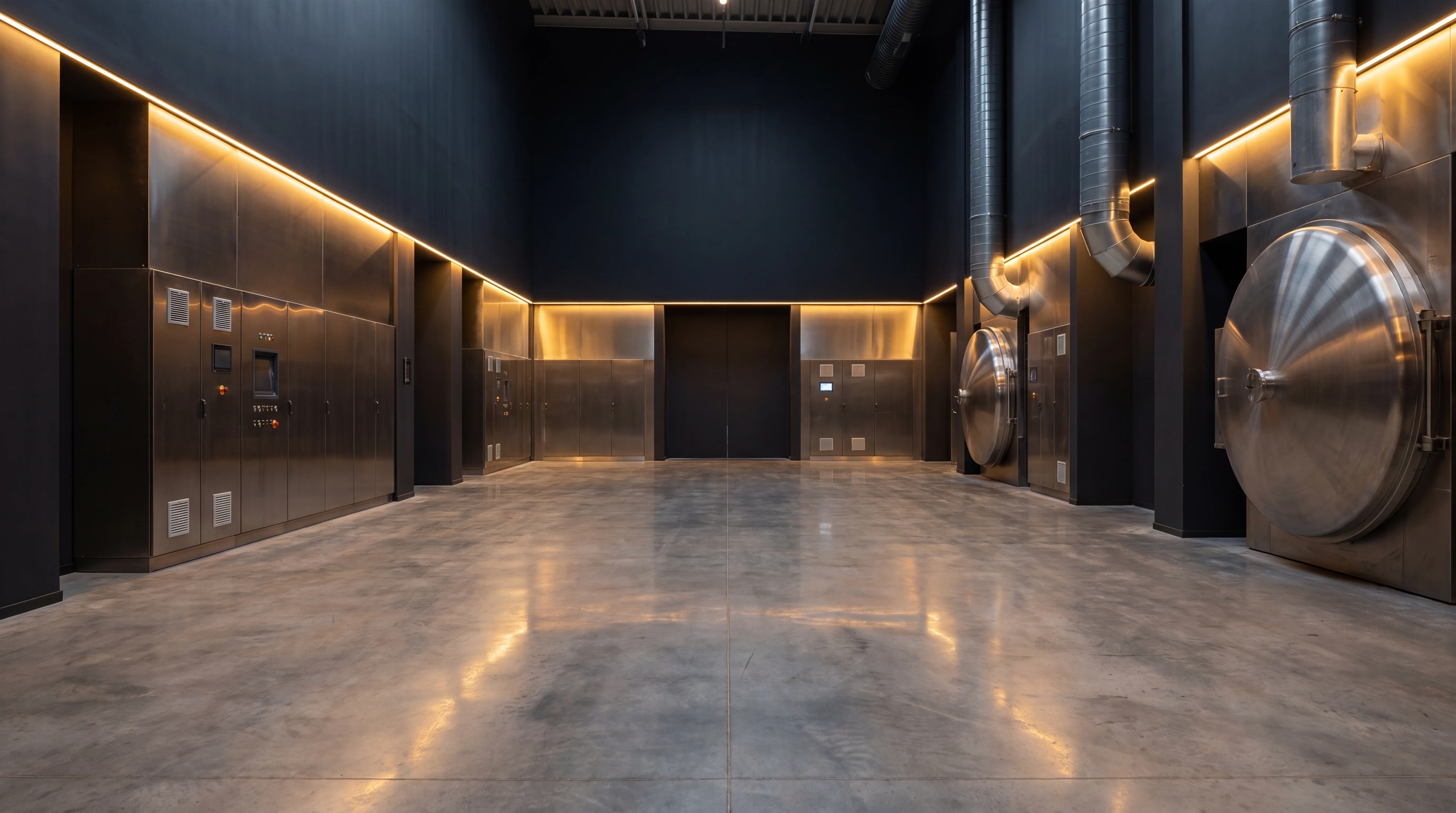
Oven calibration is the process of verifying and adjusting the temperature accuracy of laboratory and industrial ovens against NIST-traceable reference standards. The procedure establishes whether an oven's temperature controller, sensors, and heating elements produce and maintain temperatures within specified tolerances across the entire working volume. Calibration is performed using calibrated thermocouples or platinum resistance thermometers (PRTs) traceable to the International Temperature Scale of 1990 (ITS-90), which is the equipment calibration standard specified by the International Committee of Weights and Measures for measurements on the Kelvin and Celsius temperature scales.
Temperature uniformity is a central focus of oven calibration. Multiple calibrated sensors are placed at defined locations throughout the oven chamber to measure spatial temperature variation. The resulting data determines whether the oven meets the uniformity requirements defined by applicable standards such as ASTM E145 or AMS 2750. A calibration certificate documenting measurement results, uncertainties, and traceability is issued upon completion of the calibration.
Process, Standards & Applications
The Oven Calibration Process
Step 1: Pre-Calibration Assessment
The oven is inspected for physical condition, proper operation of controls, door seals, fan function, and sensor integrity. The oven's make, model, serial number, and calibration history are documented. Any deficiencies identified during inspection are recorded before calibration proceeds.
Step 2: Sensor Placement and Configuration
NIST-traceable calibrated thermocouples or PRTs are positioned at defined locations throughout the oven's working volume. Sensor placement follows the requirements of applicable standards, with probes distributed to capture temperature gradients across all spatial zones. A minimum number of measurement points is established based on oven size and the governing specification.
Step 3: Temperature Uniformity Survey
The oven is brought to each specified setpoint temperature and allowed to stabilize. Once thermal equilibrium is reached, temperature readings from all sensor locations are recorded over a defined soak period. This temperature uniformity survey (TUS) measures spatial variation across the working volume at each setpoint. According to AMS 2750, furnace classification determines uniformity requirements ranging from ±3°C for Class 1 to ±28°C for Class 6.
Step 4: Data Analysis and Reporting
Collected data is analyzed to determine maximum temperature deviation, uniformity range, and measurement uncertainty. Results are compared against the acceptance criteria defined by the applicable standard or customer specification. An ISO/IEC 17025 accredited calibration certificate is generated that includes all measurement results, expanded uncertainties, traceability information, environmental conditions, and a clear statement of conformity.
Compliance & Standards
Oven calibration is governed by several industry standards that define performance requirements, uniformity tolerances, and calibration intervals. ASTM E145 is the standard specification for gravity-convection and forced-ventilation ovens, establishing temperature uniformity requirements for ovens used in testing operations. AMS 2750, maintained by SAE International, defines pyrometry requirements for thermal processing equipment used in aerospace and heat treatment applications, including furnace classification, temperature uniformity survey procedures, and instrumentation requirements.
ISO/IEC 17025 accreditation, administered in the United States by bodies such as A2LA, establishes the competence requirements for calibration laboratories. An ISO/IEC 17025 accredited calibration provides both NIST-traceable measurement results and documented measurement uncertainties, which distinguishes it from a standard NIST-traceable calibration that addresses traceability alone. For pharmaceutical applications, oven qualification and validation procedures are performed in compliance with 21 CFR Part 11 requirements for electronic records and signatures. NADCAP accreditation is required for pyrometry services supporting aerospace heat treatment operations.
Industry Applications
Oven calibration is essential across industries where thermal processing directly affects product quality, safety, and regulatory compliance. In aerospace manufacturing, AMS 2750 and NADCAP mandate regular temperature uniformity surveys and calibration of all thermal processing equipment used in heat treatment of structural components. Pharmaceutical and medical device manufacturers require validated oven performance for sterilization, depyrogenation, and drying processes, with calibration documentation supporting 21 CFR Part 11 compliance and FDA audit readiness.
Electronics manufacturing relies on calibrated ovens for solder reflow, component curing, and accelerated aging tests where temperature accuracy directly impacts product reliability. Automotive manufacturers follow CQI-9 heat treatment system assessment requirements, which include temperature uniformity surveys aligned with AMS 2750 classifications. Materials testing laboratories depend on calibrated ovens for moisture determination, ash content analysis, and thermal conditioning of specimens per ASTM test methods. Food processing facilities require calibrated ovens to maintain temperatures that ensure pathogen elimination and regulatory compliance with food safety standards.
Supported Instrument Variants
Forced Air Convection Oven Calibration
Forced air convection ovens use internal fan systems to circulate heated air throughout the chamber, producing superior temperature uniformity and faster thermal recovery after door openings compared to gravity convection designs. Calibration of forced air convection ovens is performed in accordance with ASTM E145, which defines performance specifications for forced-ventilation ovens used in testing operations. During calibration, NIST-traceable sensors are positioned throughout the working volume to verify that the fan-driven airflow maintains temperature uniformity within the tolerances specified by ASTM E145.
The calibration process evaluates temperature accuracy at the controller setpoint, spatial uniformity across all zones of the chamber, and temporal stability over defined soak periods. Fan speed and airflow patterns directly influence uniformity results, so calibration is performed with the oven operating under its normal configuration. Forced air convection ovens are widely used in pharmaceutical laboratories, quality control testing, and materials research where consistent temperature distribution is critical to test validity.
Vacuum Oven Calibration
Vacuum ovens operate under reduced atmospheric pressure, enabling drying and thermal processing of heat-sensitive materials, flammable solvents, and oxidation-prone substances at lower temperatures than conventional ovens. Calibration of vacuum ovens presents unique challenges because the absence of air eliminates convective heat transfer, resulting in temperature gradients that differ from those found in atmospheric ovens. NIST-traceable temperature sensors are placed in direct contact with shelf surfaces and at specified locations within the chamber to capture the conductive and radiative heat transfer profile.
Calibration is performed at the vacuum levels and temperature setpoints used in normal operation, as pressure changes directly affect thermal distribution. Temperature uniformity across individual shelves and between shelves is documented at each calibration point. Vacuum ovens are essential in pharmaceutical drying, semiconductor processing, and materials research where moisture removal is required without thermal degradation or oxidation of the product.
Industrial Oven Calibration
Industrial ovens encompass large-scale batch and continuous thermal processing equipment used in manufacturing, heat treatment, powder coating, curing, and drying operations. Calibration of industrial ovens involves comprehensive temperature uniformity surveys conducted across the full working volume at each qualified operating temperature. For aerospace and defense applications, industrial oven calibration is performed in compliance with AMS 2750 pyrometry requirements, which define furnace classification based on uniformity tolerances ranging from ±3°C (Class 1) to ±28°C (Class 6).
Large chamber volumes require an increased number of NIST-traceable sensor placements to adequately characterize thermal gradients. Calibration intervals and the number of required temperature uniformity surveys are determined by the governing standard and the oven's classification. Industrial ovens that demonstrate consistent TUS results over successive calibration cycles are eligible for extended survey intervals under AMS 2750 provisions. Automotive manufacturers following CQI-9 heat treatment system assessments also require documented temperature uniformity surveys aligned with these classifications.
Drying Oven Calibration
Drying ovens are used across laboratory and industrial settings for moisture removal, sample preparation, gravimetric analysis, and thermal conditioning of test specimens. Calibration of drying ovens verifies that the chamber maintains accurate and uniform temperatures at setpoints typically ranging from ambient to 300°C, ensuring that moisture determination and drying procedures produce reliable, repeatable results. NIST-traceable calibrated sensors are distributed throughout the working volume to measure spatial temperature variation at each operating setpoint.
Drying oven calibration is particularly critical for laboratories performing ASTM test methods that specify drying temperatures and tolerances for specimen conditioning. Inaccurate oven temperatures directly affect moisture content determinations, loss-on-drying calculations, and material property testing outcomes. Calibration certificates document temperature accuracy, uniformity data, and measurement uncertainties at each tested setpoint, providing the traceability documentation required for ISO/IEC 17025 accredited laboratory operations and regulatory audit compliance.
Additional Variants Supported
- · Gravity Convection Oven Calibration
- · Mechanical Convection Oven Calibration
- · High-Temperature Oven Calibration
- · Inert Gas Oven Calibration
- · Benchtop Oven Calibration
Madison Industry Demand
Temperature Calibration Demand in Madison, WI
Madison and the surrounding Dane County area host a concentration of biopharmaceutical, life sciences, and advanced manufacturing operations that depend on accurate temperature measurement. Catalent Biologics operates a drug substance manufacturing facility in Madison featuring bioreactors ranging from 50- to 4,000-liter scale, where precise thermal monitoring is essential to product integrity. Promega Corporation, headquartered in Madison, manufactures biotechnology reagents and enzymes across multiple campus facilities, including the Chappelle Manufacturing Center, that require tightly controlled thermal environments. Sub-Zero Group, Inc. produces premium refrigeration and cooking appliances at its Fitchburg manufacturing campus, where production-line temperature verification is integral to quality assurance.
Arrowhead Pharmaceuticals is constructing a $250 million manufacturing facility in nearby Verona, further expanding the region's biopharmaceutical footprint. Exact Sciences, a molecular diagnostics company also based in Madison, relies on temperature-sensitive laboratory processes for its cancer screening products. These operations collectively generate sustained demand for NIST-traceable temperature calibration across thermocouples, RTDs, and digital reference thermometers.
Local Compliance Requirements
Biopharmaceutical manufacturers in the Madison area, including Catalent and Promega, are subject to FDA 21 CFR Parts 210 and 211, which mandate that temperature-measuring instruments used in drug manufacturing are calibrated at suitable intervals using certified reference standards. Facilities handling biological products must also comply with FDA 21 CFR Part 600 requirements for environmental monitoring and equipment qualification.
Food processing and cold-chain operations in the region are governed by FDA FSMA regulations and USDA FSIS directives that require documented calibration of temperature monitoring equipment. Advanced manufacturers such as Sub-Zero Group must meet ISO 9001 quality management standards, which include mandatory calibration of measurement instruments at defined intervals traceable to national or international standards. All calibration activities supporting these compliance frameworks are performed in accordance with ISO/IEC 17025 accreditation requirements, ensuring measurement uncertainty is documented and traceability to ITS-90 and NIST standards is maintained.